
Know your appliance
A Regency fireplace or stove should be understood by its identification label, fuel, installation and operating manual—not simply by the name on its front. Regency documentation covers substantially different appliances, including catalytic wood stoves and direct-vent gas fireplaces. Their cleaning methods, replacement parts and warning signs are not interchangeable. This guide explains how to assemble useful appliance information, recognize problems without dismantling equipment and prepare for professional maintenance. Vaughan Chimney Services is an independent service business, not an authorized Regency dealer. Manufacturer instructions, applicable requirements and the findings of appropriately qualified personnel must govern any inspection, repair or replacement decision.
Start With the Label, Not the Fireplace's Appearance
Identify whether your Regency appliance burns wood, uses gas or belongs to another product category before applying maintenance advice. A freestanding stove, an insert fitted into an existing fireplace and a factory-built gas fireplace can look related while having very different installation requirements. Record the complete model designation, serial number and fuel information from an accessible identification label or existing paperwork. Do not remove sealed glass or dismantle hot components to find it. If the label is concealed behind an unfamiliar access arrangement, ask a professional to locate and document it during service.
The importance of suffixes is visible in Regency's own documentation. Its U1500E manual identifies natural-gas and propane versions, while the F5200 manual describes a catalytic wood heater. Those are fundamentally different maintenance cases, not variations of one universal fireplace procedure. Match the appliance to the appropriate manual revision through Regency's official manual library, preserving older installation documents as well. A newer manual may provide useful updates, but its applicability must be checked against the installed appliance. Photograph the full unit and surrounding finish so a technician can connect the label information with the actual installation.
Separate the Fuel System From the Exhaust Route
For a gas Regency, the rating plate establishes the intended fuel. The cited U1500E documentation distinguishes natural gas from propane and restricts changes to certified conversion arrangements. A homeowner should never assume that changing a hose, regulator or control setting makes an appliance suitable for another fuel. Gas pressure testing, conversion, burner adjustment and gas-train repairs belong to appropriately qualified personnel. Tell the technician about any known fuel conversion, supply interruption or previous component replacement, and provide the corresponding paperwork rather than relying on a verbal description from an earlier owner.
The exhaust route also needs identification. A direct-vent fireplace has a combustion-air and exhaust arrangement that must match its approved installation instructions. A wood stove instead depends on a suitable connector and chimney system, with clearances and support appropriate to the installation. An attractive exterior chimney does not establish that either system is correctly configured. From a safe position, note where the termination appears and whether renovations have changed nearby decks, walls or landscaping. Leave verification of vent components, concealed connections, chimney condition and installation compliance to a professional familiar with that particular Regency model.
Make Symptoms Useful Without Attempting a Repair
A useful service description explains what happens, when it happens and what changed beforehand. For a gas unit, record whether the remote display responds, whether ignition starts and whether the appliance shuts down after a consistent period. For a wood stove, describe difficult starts, smoke entering the room, unusually rapid fuel consumption or a change in the established burn pattern. Do not repeatedly operate a malfunctioning appliance to obtain a better demonstration. An existing photograph, a short observation made before shutdown and a clear timeline can provide more value than repeated unsuccessful starts.
Keep checks outside the combustion enclosure. With the appliance off and cool, confirm that furniture or stored objects have not blocked required openings, inspect the visible barrier for damage and consult the correct user instructions for ordinary control settings. Replace user-accessible remote batteries only as directed. Do not adjust gas pressure, defeat an interlock, move gas logs or remove sealed glass. If you smell gas or a carbon-monoxide alarm activates, leave the building immediately. Call emergency services or the gas supplier from outside, following their instructions; do not remain indoors to troubleshoot, use switches or investigate the source.
Treat the F5200's Catalyst as a Model-Specific System
Regency identifies the F5200 as a hybrid catalytic wood stove. Its product information describes a catalytic thermometer and a bypass control used in relation to the thermometer's active range. That arrangement matters because loading, startup and catalyst operation must follow the F5200 instructions rather than generic advice for a non-catalytic stove. Use only the fuel permitted by the applicable manual. Do not burn garbage, treated lumber or other unsuitable materials, and never alter the manufacturer's minimum burn setting to obtain a slower fire. Unapproved operating changes can affect combustion and increase hazardous emissions.
If the stove becomes difficult to control, repeatedly smokes or shows a persistent change in catalyst performance, stop treating the issue as a simple air-control preference. Fuel condition, chimney draft, deposits, seals and combustion components may all require consideration. A professional can assess the catalyst and related passages using the model's inspection and cleaning requirements. The presence of a catalyst does not eliminate chimney maintenance. Keep operating observations alongside fuel records, including how wood was stored and whether the problem began with a different supply. Those details help distinguish a combustion-system concern from fuel-related performance without encouraging unsafe experiments.
Ask for an Inspection That Follows the Whole Installation
Professional maintenance should address more than the surface visible through the viewing window. For a Regency wood appliance, the inspection scope may include the firebox, liners or firebrick, baffles, catalyst where fitted, door closure, connector and chimney. Cleaning methods should suit the installed components, and removed parts must be returned correctly. Ask how accessible and concealed areas will be assessed and whether any limitations will remain. A statement that the chimney was swept does not, by itself, establish that every appliance component or surrounding clearance has also been evaluated.
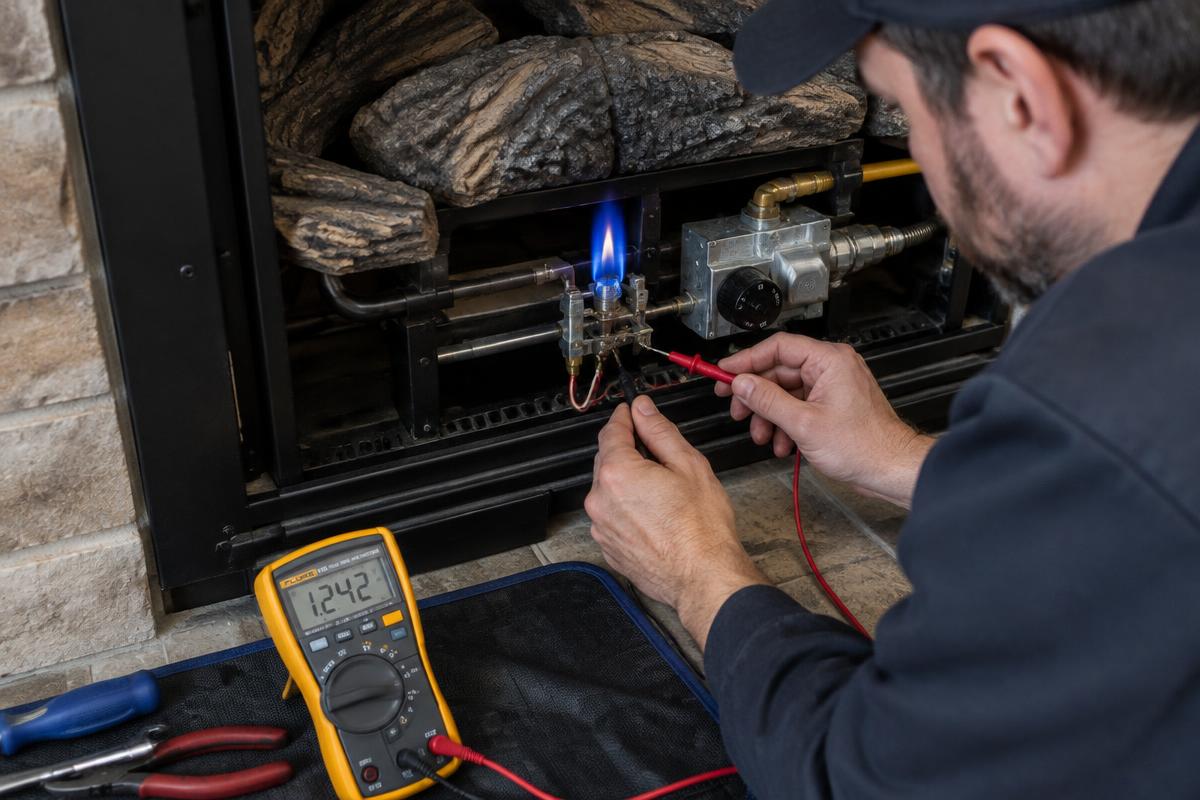
For a gas Regency, appropriately qualified personnel should assess the appliance and its approved vent arrangement, including burner and ignition condition, relevant electrical connections, seals and operational safety. Gas-system tests and adjustments are professional work. The technician should also consider whether accumulated dust, damaged components or changes around the termination affect operation. Request a written description separating observations, cleaning performed, parts recommended and unresolved questions. Manufacturer maintenance intervals and actual operating conditions should guide scheduling; heavy use, contamination, an unknown service history or abnormal performance can justify attention sooner than a homeowner's usual seasonal appointment.
Understand Why Glass and Gaskets Are Functional Parts
Viewing glass, its retaining arrangement and surrounding seals are part of the appliance's operating system. A crack, loose frame, displaced gasket or damaged closure is not merely cosmetic. Stop using an appliance with damaged viewing glass or an uncertain enclosure seal and arrange assessment. Do not substitute ordinary window glass, apply household sealant or tighten unfamiliar retainers in an attempt to stop a leak. The required material, thickness, mounting method and gasket specification must come from the exact appliance documentation and verified parts information.
On a wood stove, door sealing can affect how much air reaches the fire; on a sealed gas fireplace, the glass assembly helps maintain the intended combustion enclosure. Neither situation supports a universal gasket kit selected only by diameter. Owner cleaning should remain within the user manual's explicit allowances, with the appliance fully cool and approved products used only on permitted surfaces. This guide does not instruct homeowners to remove sealed gas glass. A professional should evaluate deposits inside that enclosure, clean as appropriate and restore the assembly correctly, while also investigating abnormal soot rather than simply removing the evidence.
Match Control Advice to the Installed Hardware
Regency's manual library lists several remote-control families, including Proflame, Maxitrol and FireGenie documentation. Their presence in one manufacturer's library does not mean they are interchangeable or installed on every fireplace. Record the handset markings and any control identification available in existing paperwork. Note whether an accessory blower, thermostat or lighting feature was originally supplied or added later. A control complaint should identify which function is affected: an unresponsive handset, an ignition failure and a blower that does not start are different observations requiring different diagnostic paths.
Use the operating sequence for the installed control rather than an online video showing a similar-looking remote. A homeowner may check ordinary settings and approved battery access, but should not bridge terminals, alter wiring or bypass a safety circuit. If operation changes after a battery replacement, document the battery type and displayed messages without repeatedly attempting ignition. Also distinguish an optional comfort accessory from the appliance's combustion controls. A failed accessory does not automatically identify the reason for a burner problem, and a working remote display does not prove that the fireplace itself is safe to operate.
Order Components From Evidence, Not Visual Similarity
An exact replacement decision should connect the model, serial range, fuel, existing component and applicable parts listing. Regency products can retain familiar names while revisions change internal equipment. A replacement valve, pilot assembly, glass panel, catalyst or gasket should therefore be checked against documentation rather than a photograph alone. Ask the supplier or qualified service provider to identify the proposed part number and explain any supersession. A component advertised as fitting Regency products generally is not enough evidence that it belongs in your particular appliance.
Keep packaging labels, invoices and the installer's record after a repair. If a previous part has no readable markings, the technician may need manufacturer-supported identification before proceeding. Do not authorize improvised gas components, altered safety devices or unverified glass substitutions simply because the original item is difficult to obtain. Decorative fronts and trim also require compatibility checks: appearance can conceal differences in ventilation openings, barriers or access. Where documentation is incomplete, pausing the repair is safer than assuming that physical fit establishes suitability. An unresolved parts question should remain clearly identified in the service record.
Prepare for Winter Without Turning Startup Into a Test
Before the heating season, review the last inspection report and resolve outstanding recommendations. Confirm that smoke and carbon-monoxide alarms are maintained according to their own instructions, and clear stored materials from required appliance clearances. For a wood stove, organize suitable dry fuel and ensure ash handling follows the manual, using an appropriate noncombustible container and safe storage away from combustibles. For a gas appliance, review the normal startup instructions and control batteries before cold weather arrives. An appliance with an unresolved fault should not be fired merely to see whether the problem disappeared over summer.
Snow, ice, leaves and outdoor construction can change conditions around a termination. Observe accessible areas from ground level without climbing, inserting tools into the vent or operating equipment with a suspected blockage. Arrange professional assistance when the outlet cannot be assessed safely. During extended periods of non-use, follow the exact model's shutdown guidance rather than generic advice about leaving every pilot on or off. After a storm, renovation, chimney event or unexplained shutdown, reassess readiness before restarting. Seasonal preparation is most useful when it prevents rushed decisions during the first prolonged cold spell.
Update the Service Plan When Your Use Changes
A Regency used occasionally for atmosphere can accumulate a different operating history once it becomes a regular part of winter evenings. Tell the service provider about that change rather than retaining the same schedule automatically. For a wood appliance, increased use makes fuel preparation, ash handling and deposit observations more significant. For a gas appliance, describe longer runs, changes in control settings and any new behaviour under those conditions. The correct manual remains the starting point, while actual findings help refine the next maintenance visit.
New occupants also need a practical handover. Show them where the correct instructions are kept and which owner tasks are permitted, without teaching internal repairs. Explain any unresolved recommendation and the reason the appliance is currently out of use. Keep the most recent report with the model details so a later technician does not mistake an old symptom for a new fault. This record is especially useful when the home changes hands or more than one person operates the stove.
Build a Repair-or-Replacement Decision Around Findings
Age alone does not settle whether a Regency appliance should be repaired. A useful decision considers the condition of the combustion enclosure, chimney or vent, controls, required parts and surrounding installation. A limited repair with verified components is different from extensive deterioration combined with unavailable safety-critical parts. Ask for the reason behind each recommendation, what remains serviceable and what uncertainties could change the scope. If the inspection identifies an unsafe condition, keep the appliance out of service until qualified personnel establish an appropriate resolution.
Replacement also needs planning. A new unit may require different venting, clearances, framing, electrical provisions or hearth protection, even when the visible opening appears suitable. Compare complete installation proposals rather than appliance prices alone, and establish how abandoned components will be handled. Maintain an ownership folder containing manuals, label photographs, installation approvals where available, inspection reports and repair invoices. Vaughan Chimney Services should be understood as an independent service business, not an authorized Regency dealer or manufacturer representative. Any proposed work still requires the appropriate qualifications, verified compatibility and adherence to the applicable manufacturer documentation.