
Know your appliance
An Empire Comfort Systems fireplace should be identified by its rating plate, not simply by the Empire name on a brochure or an attractive flame behind glass. Different Empire appliances use different fuels, vent arrangements and ignition systems, and those differences determine what maintenance and repairs are appropriate. This guide helps homeowners in Vaughan, Ontario, organize the information needed for safe ownership and informed service decisions. Vaughan Chimney Services is an independent service business, not an authorized Empire dealer or manufacturer partner. The guidance below draws on Empire documentation but does not replace the manual supplied for your exact appliance, an assessment by an appropriately qualified professional, or confirmation of applicable local requirements.
Start with the complete Empire identity
Record the full model number, serial number and fuel designation before looking for instructions or replacement parts. Empire model names often contain letters and numbers that distinguish size, control type, fuel and production version. For example, the manufacturer's DVCD homeowner manual covers separate millivolt and intermittent-pilot model families. A manual that shares only the first few characters of your model number is not necessarily sufficient. Photograph the rating plate if it is visible through the owner-access area described in your manual, without disturbing sealed combustion components.
Keep a second photograph showing the entire fireplace, its decorative front and the surrounding installation. These images help distinguish the appliance from accessories that may have been selected separately. If the plate is inaccessible, do not pull an insert forward or dismantle the fireplace to find it. Have its location confirmed during service. Also record whether the unit is installed as a built-in fireplace, an insert within an existing fireplace, or another appliance format. That context affects access, vent inspection and the scope of any proposed replacement.
Understand fuel and venting before comparing advice
Empire documentation includes direct-vent products and other product categories, including vent-free equipment marketed in some jurisdictions. Those categories must not be treated as interchangeable. A direct-vent fireplace uses its specified venting arrangement to manage combustion air and exhaust. An existing masonry chimney nearby does not establish that the fireplace is connected to it, and a wall termination does not identify every component hidden behind the enclosure. The installation manual and an inspection establish the actual arrangement.
For a Vaughan property, do not assume an Empire vent-free product is permitted because it appears on a manufacturer website or was purchased elsewhere. Its legality and suitability must be verified with the relevant local authorities and applicable Ontario requirements. This guide does not recommend unvented operation. Likewise, natural gas and propane versions require the fuel identified on the rating plate. A fuel change is not a homeowner adjustment; any permitted conversion requires the correct certified kit, qualified work and the documentation specified for the appliance.
Distinguish the ignition system from the remote
Empire's DVCD documentation distinguishes millivolt controls from intermittent-pilot controls. That distinction matters when discussing startup behaviour, power requirements and compatible replacement components. A handheld remote is only one part of the control arrangement. Its appearance does not establish which ignition system is installed, and replacing it will not correct a venting fault, damaged ignition component or gas-supply problem. Record the remote model and any separate receiver identification alongside the fireplace model.
When there is no response, safe observations include checking the displayed mode, thermostat setting and owner-replaceable batteries where the exact manual permits this. Record whether the display works, whether the appliance responds to its normal control, and whether any fault indication appears. Do not repeatedly attempt ignition, improvise wiring connections or bypass a safety device. If the same failure returns, leave the appliance off and arrange diagnosis. Information about when the problem began is more useful than a series of undocumented resets that may obscure the original symptom.
Separate an inconvenience from an emergency
A gas smell, carbon monoxide alarm, smoke entering the room or symptoms such as headache and dizziness require an emergency response rather than routine fireplace troubleshooting. If gas is suspected, leave the building without operating electrical switches or attempting to light the appliance. Call the gas supplier from outside and follow its instructions; contact emergency services when appropriate. If a CO alarm sounds, get everyone into fresh air and seek emergency assistance. Do not return to investigate the fireplace yourself.
Visible soot, delayed ignition, unusual flame movement, a damaged glass assembly or repeated safety shutdowns also mean the fireplace should remain out of use pending professional assessment. Do not continue operating it to obtain a better video. A photograph already taken from a safe position can help a technician, but documenting the symptom is secondary to stopping exposure. Empire's gas-fireplace warnings emphasize qualified installation and service because combustion, fuel delivery and vent performance must be evaluated together, not through isolated guesses about the most visible component.
Clean accessible surfaces without disturbing combustion
Let the appliance cool completely before any owner maintenance. Clean only the surfaces and areas identified for homeowner attention in the exact manual, using products suitable for their finish. Dust on an accessible exterior grille can often be addressed without entering the combustion enclosure, but decorative surfaces vary. Avoid abrasive pads, household sprays directed into openings and any cleaner that leaves a combustible residue. Keep furniture, baskets, blankets and cleaning supplies away from the appliance's required clearances.
Do not remove sealed gas glass as a do-it-yourself cleaning step under this guide. Interior glass deposits, displaced logs, burner contamination and deteriorated sealing materials should be assessed during qualified service. Artificial logs and media have specified positions; rearranging them for a fuller flame can interfere with combustion. Similarly, an attractive decorative barrier is not a substitute for correctly installed glass. Empire manuals warn that hot glass can cause burns and require the supplied protective barrier. Maintain that barrier and supervise children and other people who may not recognize the hazard.
Inspect the installation, not just the visible fire
A service inspection should consider the appliance, its combustion enclosure, controls, vent system and surrounding installation as one system. Depending on the model and access, the professional may assess the condition of seals, approved media placement, ignition operation, electrical connections, vent connections and termination. The technician determines which tests are appropriate and records limitations where concealed components cannot be inspected. A flame that looks familiar does not prove the venting and safety functions are satisfactory.
Homeowners can contribute useful observations without disassembly. From ground level, note whether an exterior termination appears covered by snow, vegetation or building work. Do not climb onto a roof, remove a termination cap or insert tools into the opening. Report renovations that changed a wall, roofline, deck or nearby window. Also mention new exhaust fans or changes to the fireplace enclosure. These details help distinguish an appliance fault from an installation or environmental issue that a replacement control alone would not solve.
What a useful service appointment should establish
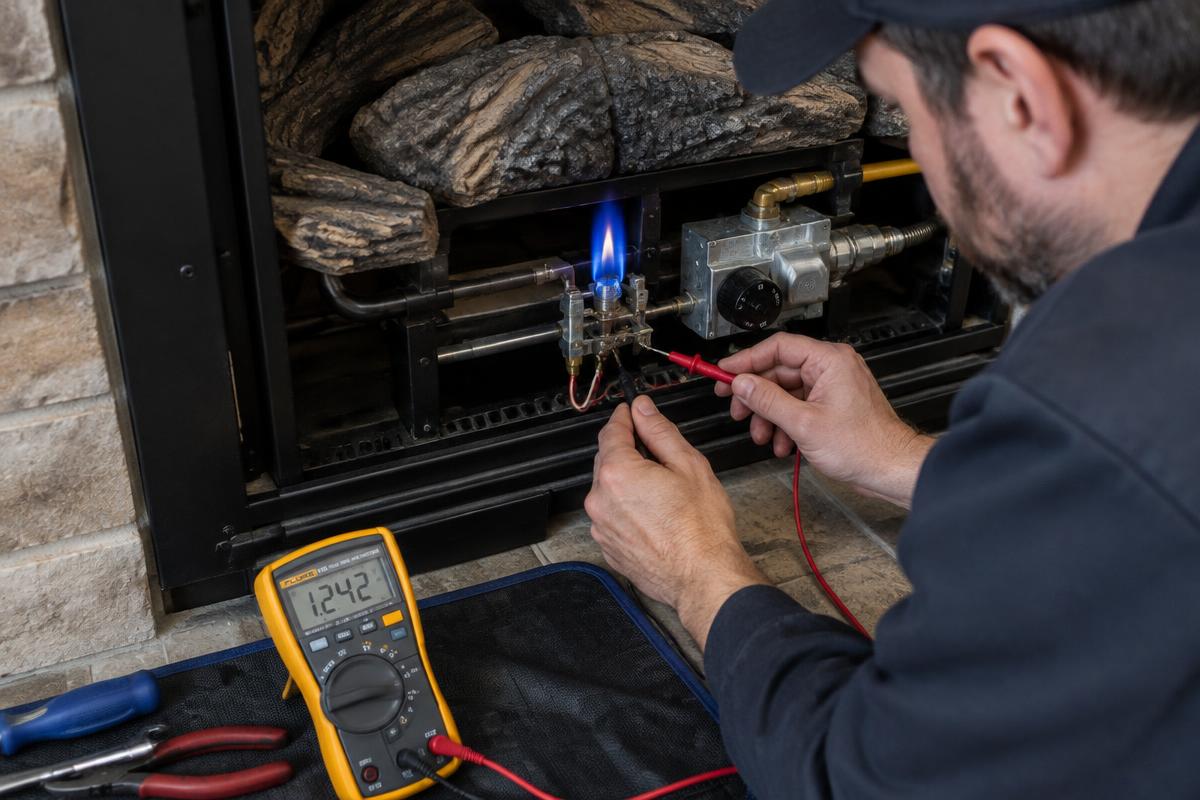
Begin a service request with the full appliance identity, the main symptom and whether the unit has been taken out of use. Include photographs of the installation and accessible rating plate, plus any existing fault indication. Describe the sequence plainly: the appliance receives a command, ignition does or does not occur, and shutdown happens immediately or later. Do not speculate that a particular valve or sensor must be replaced unless that diagnosis has already been documented by a qualified professional.
A sound service process confirms the model, reviews relevant instructions, inspects the installation and investigates the reported symptom before recommending parts. Ask for an explanation of the finding, any unresolved uncertainty and the conditions required before the fireplace can return to service. Vaughan Chimney Services should be understood as independent of Empire. Manufacturer warranty questions and any work requiring an authorized sales channel must be directed through the appropriate dealer or Empire support route. Independent service should never be presented as manufacturer authorization or a guarantee of warranty coverage.
Order parts by documented compatibility
Two Empire fireplaces can have similar fronts yet require different glass assemblies, ignition components, barriers or controls. The complete model, production version and applicable service-parts documentation matter more than a photograph of a component. A replacement part should be supported by the manufacturer's listing or a documented supersession for that appliance. A seller's broad claim that a part fits Empire fireplaces is not enough, especially for combustion, fuel-control or venting components.
Keep packaging labels and invoices for installed parts, including the part number and the appliance to which it was fitted. If a component is obsolete, ask whether Empire identifies an approved replacement or whether a larger assembly must be changed. Do not substitute generic glass, alter a protective barrier or adapt a different vent component because dimensions appear close. Fuel conversion parts require particular care because compatibility involves the complete approved conversion, not one interchangeable-looking item. Unverified substitutions can turn an otherwise repairable problem into a safety or compliance issue.
Create a record that survives a change of owner
Keep the owner's manual, installation manual, rating-plate photograph, purchase information and available installation records together. Include permits or inspection documents where applicable, service reports, parts invoices and any documented fuel conversion. Store digital copies somewhere accessible without opening the fireplace. Paper manuals should not be placed in an appliance cavity where heat could damage them or create a fire risk. A clearly labelled household folder is a more useful location.
Add a short operating history: usual control settings, periods of disuse, previous shutdowns and any changes to the surrounding room. If you inherit an Empire appliance with no records, do not assume that years of previous use establish correct installation. Start by identifying the appliance and arranging an assessment appropriate to its condition and history. When selling the home, pass along the actual records rather than a verbal assurance that the fireplace was serviced. The next owner needs to know what was examined, what was replaced and which questions remain unresolved.
Choose between repair and replacement on evidence
Repair is reasonable when the appliance is correctly installed, its combustion enclosure and vent system remain serviceable, and the required approved parts are available. A single control failure does not automatically justify replacing the fireplace. Conversely, recurring problems should not be treated as an endless sequence of small repairs without considering the underlying installation, heat damage, corrosion or unavailable safety-critical components. Ask which findings support the recommendation.
Replacement planning must include more than the dimensions of the visible opening. The new appliance may require different venting, termination clearances, framing, electrical arrangements, finishing materials or access provisions. Existing vent components are not automatically reusable with another Empire model, let alone another brand. Compare the full proposed scope, including removal and necessary surrounding work, rather than comparing appliance prices alone. Warranty eligibility for an existing unit is a separate question governed by its terms and purchase history. Neither independent service nor replacement advice should imply that Empire has approved the recommendation.
Prepare for Vaughan's heating season
Before heavier autumn use, review the manual, clear stored items from the fireplace area and check that the protective barrier is secure and undamaged. Arrange any overdue inspection before depending on the appliance for supplemental warmth. Test household smoke and carbon monoxide alarms according to their manufacturers' instructions. If the fireplace has been unused for a long period or its history is unknown, a cautious restart begins with assessment, not repeated ignition attempts.
During winter, observe accessible exterior terminations from a safe ground-level position after substantial snowfall or drifting. Do not modify the cap, add a homemade screen or cover the vent to stop cold air. In spring, record any developing symptom and address it before it is forgotten. Seasonal pilot settings and battery storage depend on the specific control system and manual; there is no universal Empire shutdown procedure. Avoid applying a neighbour's instructions to your appliance simply because both fireplaces display the same brand name on their documentation.
Describe changes accurately instead of diagnosing by appearance
A film on the glass, an unfamiliar sound or a change in startup behaviour can have several explanations. Brief condensation and persistent deposits are not the same observation, and a fan sound should be distinguished from a bang during ignition. Note when the symptom occurs, whether it is new and whether the room or exterior conditions changed. The purpose is to give the service professional a reliable history, not to decide remotely that an unusual event is harmless.
Some operating characteristics are model-specific, including blower behaviour, control response and available backup functions. Consult the matching manual before assuming a fault or promising operation during an outage. If a symptom includes soot, combustion odour entering the room, repeated failed ignition or a safety alarm, stop using the appliance and escalate appropriately. For a nonurgent question, contact Vaughan Chimney Services with the complete model and concise observations so we can confirm the service scope and next step. That approach is more productive than asking whether every Empire fireplace should behave like a different model seen online.