
Know your appliance
An Ortal fireplace can be closely integrated with its surrounding architecture, making accurate documentation especially important when maintenance or repair is needed. The visible flame opening does not reveal every relevant component: enclosure ventilation, service access, vent routing and optional mechanical systems can all affect the work. Ortal’s official documentation separates product families, power-vent equipment, heat-control systems and homeowner guidance, so features must be verified for the actual installation rather than assumed brand-wide. This guide focuses primarily on architectural gas appliances while recognizing that Ortal’s documentation also includes other categories. Vaughan Chimney Services is independent, not an Ortal manufacturer partner or authorized dealer. Manufacturer instructions may require authorized providers for particular work; verify those requirements before booking or commissioning repairs.
Identify the Exact Fireplace, Series and Installation
Begin with the full model designation, serial number and installation records. Ortal’s manual library distinguishes multiple product families and configurations, including front-facing, corner, tunnel, three-sided and other architectural arrangements. Its built-in documentation also identifies production applicability, demonstrating why a general brand manual is not sufficient for every fireplace. Obtain information from existing paperwork or a safely accessible identification label. Do not open sealed glass, disturb glass-to-glass joints or remove finished wall materials merely to find a number. A technician can establish identification during a planned visit if safe access is not available to the owner.
Collect the original layout drawings, vent details and accessory information where possible. Photographs should show the entire enclosure, visible ventilation openings, controls and accessible service panels, not only the flame window. In a multi-sided installation, include each accessible face. Record previous work and any changes to surrounding finishes, cabinetry or televisions. A custom-looking installation can conceal standard components, while a simple-looking fireplace can depend on additional equipment elsewhere in the building. The service provider needs evidence of what was actually installed before selecting instructions, assessing access or ordering parts. Appearance is useful context but cannot establish the complete system configuration.
Distinguish Architectural Gas From Other Ortal Categories
Ortal is strongly associated with architectural gas fireplaces, but its current documentation library also separates outdoor and electric material from indoor gas instructions. Those categories should not be merged into a single service checklist. An indoor sealed gas installation requires attention to its combustion enclosure and approved vent system. An outdoor appliance has its own permitted location and exposure requirements. An electric appliance has electrical and airflow concerns rather than gas-combustion servicing. Confirm the category before arranging work, particularly if you inherited the installation and have only a remote handset or a sales description.
For a gas model, identify the fuel designated for the actual appliance and retain any approved conversion records. Gas supply, pressure, control adjustments and conversion are professional tasks, not owner troubleshooting. Do not assume that a replacement burner or control from another Ortal series is compatible because the viewing width is similar. The specific manual and approved parts documentation must govern the work. Where older and newer product families share a comparable appearance, production details can be essential. Clarifying these basics early avoids a visit prepared for a standard indoor gas fireplace when the installed appliance or accessory system requires a different scope.
Treat Gas Smell and Carbon Monoxide as Emergencies
If you smell gas, leave the building immediately and keep everyone outside. Do not light the fireplace, operate switches, use an indoor phone or attempt to locate the leak. From a safe place outside, contact the gas supplier’s emergency line; if the supplier cannot be reached, contact the fire department. Follow emergency instructions and do not restart the appliance or re-enter until cleared. An online enquiry or ordinary maintenance appointment is not the correct response to a suspected gas leak. Ortal’s built-in instructions explicitly warn against operating a fireplace when gas is smelled or safe operation is in doubt.
For a carbon monoxide alarm, move everyone into fresh air and call emergency services from outside, even if there is no odour and the fireplace appears normal. Seek urgent medical care for possible exposure symptoms such as headache, dizziness, nausea or confusion. Carbon monoxide cannot be ruled out by checking the flame colour or opening a window and continuing operation. Do not silence the alarm to resume heating. After any emergency, keep the appliance out of use until the cause is investigated and operation is permitted. Routine service scheduling is appropriate only for concerns without an immediate gas, CO, fire or electrical hazard.
Verify Heat Management Instead of Assuming a Cool Wall
Architectural fireplace enclosures may incorporate specified heat-release arrangements or separate heat-control equipment, but those details must be verified for the exact Ortal installation. The official resource library includes a separate Heat Control System manual, reinforcing that associated equipment has its own requirements. Do not interpret a general cool-wall description as permission to build any combustible finish close to any Ortal model. The applicable appliance instructions, enclosure details and accessory documentation determine what is allowed. If records are incomplete, have the installation assessed before adding cabinetry, artwork, shelving or a television above the opening.
Keep documented enclosure ventilation and heat-discharge paths clear. Do not cover an opening because it appears decorative, reroute a duct or seal a gap to reduce warm air movement. These changes can alter temperatures inside the enclosure and around adjacent materials. A wall that feels comfortable during one short firing does not establish compliance under all operating conditions. Similarly, heat management does not make viewing glass safe to touch or eliminate other protective requirements. Report unusual wall discolouration, excessive localized heating or changes after renovation. The assessment should consider the enclosure and heat path as well as the visible fire, with any concealed limitations clearly documented.
Understand the Boundaries of Power-Vent Troubleshooting
Ortal publishes a dedicated power-vent manual covering specified equipment and requiring its use alongside the applicable fireplace instructions. A power vent is therefore a defined system, not an interchangeable exhaust fan. Its presence depends on the actual installation; not every Ortal fireplace uses mechanical venting. If installed, obtain the fan and controller details, vent drawing and access locations before arranging service. A long or unusual vent route should not be judged by rules intended for a different configuration, and a working room fan says nothing about whether the combustion vent system is operating correctly.
Owners can report whether a fan sound has changed, whether startup stops consistently or whether the problem began after a power interruption. They must not bypass interlocks, alter wiring or force repeated starts. Inspection and repair need the qualifications and authorization required by the manufacturer’s applicable instructions. Ortal’s power-vent documentation specifies authorized service arrangements, so an independent provider should not be assumed eligible to perform every task. Confirm the required channel before work proceeds. If specialized service is needed, provide the collected records and symptoms to that provider rather than experimenting with the controller or treating the fireplace’s refusal to operate as an inconvenience to override.
Protect the Glass Assembly and Approved Firebox Arrangement
Ortal’s built-in instructions warn against operation with cracked glass, unsecured glass or unsealed glass-to-glass connections. These conditions matter especially in multi-sided designs where the enclosure includes carefully fitted joints. Homeowners should not remove glass to clean inside, investigate ignition or reach decorative materials. Exterior care should follow the applicable owner guidance, using permitted methods only after complete cooling. Report chips, cracks, looseness or changes at joints and leave the appliance unused where integrity is uncertain. Do not apply improvised sealant or assume a small visible defect is merely cosmetic.
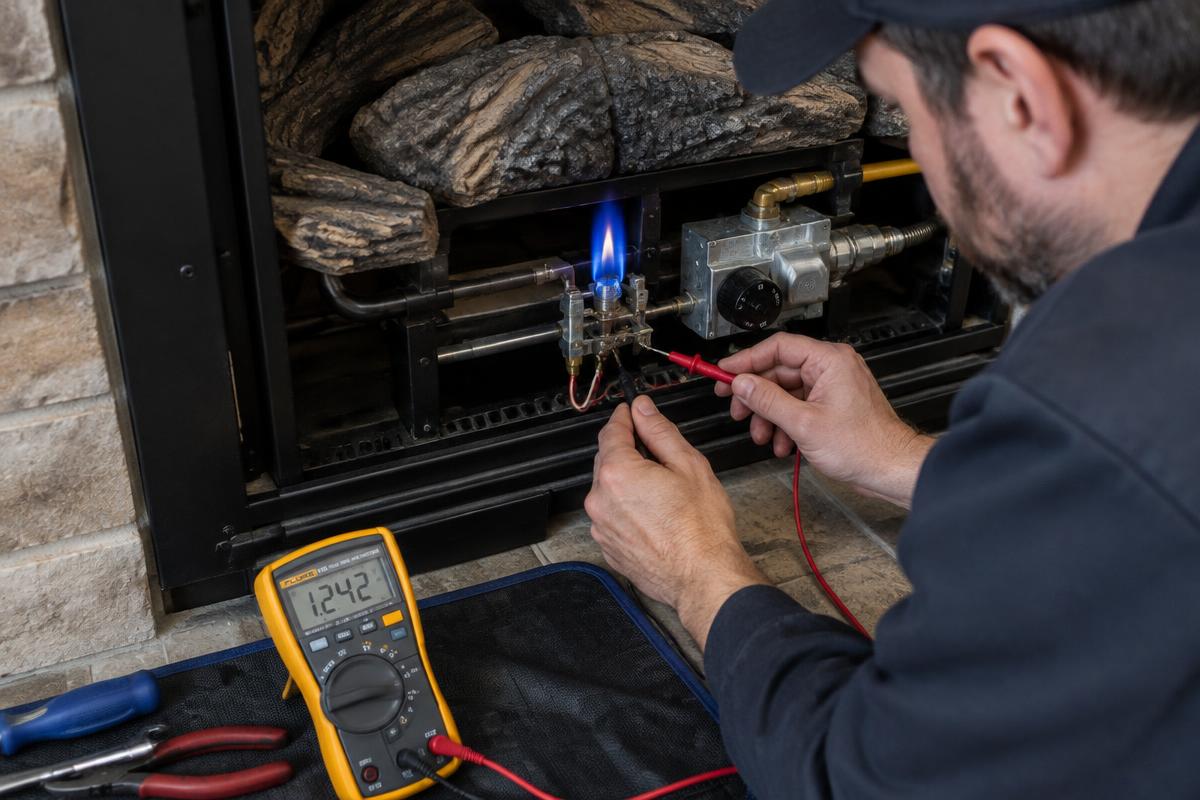
Interior logs, embers, liners and decorative media also belong to the tested configuration. Do not move them to alter flame shape, add material intended for a different model or imitate a display photograph. A qualified and appropriately authorized technician should handle internal access and verify reassembly under the applicable instructions. Replacement glass must be the approved type and assembly, not ordinary glazing cut to a similar size. Protective arrangements and hot-surface precautions remain important even where the architecture emphasizes uninterrupted views. Keep children and pets away from heated surfaces, and do not infer safe contact temperatures from the appearance of the surrounding wall.
Record Operating Problems Without Attempting Repairs
A useful fault report describes the sequence of events. Note whether the remote responds, whether ignition is attempted, how long the appliance runs before stopping and whether any message appears. Include weather, recent power loss, renovations and the operation of other household extraction equipment if there is a consistent relationship. Perform only owner-level checks specifically permitted by the exact operating guide. Avoid repeated resets after failed ignition, and do not remove covers to investigate internal controls. A video recorded from a safe distance may supplement the history, but it cannot establish the cause of a combustion or safety fault.
Keep the appliance off for damaged glass, unexpected soot, forceful ignition, abnormal flames or any condition that makes safe operation uncertain. Gas smell and CO alarms require emergency action, not a diagnostic video or booking request. Do not assume that a sensor, valve or remote is defective because another owner reported similar symptoms. Several faults can interrupt the same startup sequence, particularly when mechanical venting or other accessories are involved. Preserving the original condition gives the service provider a clearer starting point. Unrecorded media changes, wiring alterations or repeated attempts to defeat a shutdown can make diagnosis harder while creating additional risk.
Confirm Authorization, Inspection Scope and Parts Compatibility
Before commissioning work, establish who is permitted and qualified to perform it under the applicable Ortal instructions and local requirements. Some manufacturer documents specify authorized dealers, installers or the gas supplier for installation and repair. Vaughan Chimney Services is independent and should not be presented as automatically meeting that manufacturer authorization. A suitable assessment needs the correct documents and may include the combustion enclosure, glass and joints, ignition system, approved media arrangement, controls, accessible venting and relevant accessories. Gas-related measurements and adjustments belong to an appropriately qualified professional within the authorized service arrangement.
Ask for a written explanation of findings and any areas that could not be inspected. Parts should be matched to the model, serial applicability, fuel and installed control or accessory configuration. A similar-looking remote receiver, fan or glass panel may not be compatible. Where a component is superseded, confirm the approved replacement and associated instructions rather than relying on physical fit. Warranty approval must come through the appropriate manufacturer channel, not from assumptions made during independent booking. After authorized work, the required reassembly and operating checks should be completed and documented, including any affected venting or safety functions rather than only the component that was replaced.
Prepare Access and Maintain a Seasonal Record
Architectural finishes can make access the most important practical detail of a service visit. Provide drawings and photographs showing removable panels, equipment locations and any known concealed access points. Do not cut finishes or detach glass beforehand. Let the appliance cool completely, clear the working area and have the remote, manuals and service history ready. Explain whether a power vent or other component is on a roof, high wall or restricted part of the property. Confirm who is responsible for any necessary specialist access arrangements so the visit is not delayed or attempted unsafely.
Plan maintenance before the main heating season using the applicable manufacturer guidance and the installation’s service history. Keep accessible room-side openings clear without disturbing components, maintain smoke and CO alarms and observe exterior terminations only from a safe location. Document intermittent problems when they occur, including their timing and operating conditions. At season’s end, arrange unresolved work rather than assuming the next startup will be different. Follow the model-specific shutdown procedure; pilot modes, electrical supply requirements and accessory behaviour vary. Seasonal care is not permission to disable controls or isolate individual system components in a way the instructions do not permit.
Evaluate Repair and Replacement as Architectural Projects
A repair is appropriate when the fault is clearly identified, approved parts are available and the rest of the installation remains suitable. Replacement deserves closer consideration for significant damage, unavailable safety-critical equipment or extensive enclosure and vent corrections. Ask whether the fault is within the fireplace or elsewhere in the system, because replacing a control will not correct unsuitable venting or obstructed heat release. Age can inform the discussion but should not substitute for inspection. Obtain a defined scope and an explanation of any uncertainty before authorizing expensive work or a series of guessed component replacements.
Replacing an architectural fireplace can affect framing, glazing dimensions, finishes, service access, vent routing and heat-management requirements. Existing power-vent equipment or ducts should not be presumed reusable with a new model. Compare the complete replacement project with the complete repair scope, including reinstatement of finishes and required approvals. If a renovation is planned, select and verify the appliance requirements before finalizing the surrounding design. Keep the independence of Vaughan Chimney Services clear and confirm any manufacturer-authorized involvement needed. A realistic decision depends on documented compatibility and access, not simply finding a new fireplace with approximately the same viewing width.