Know your appliance
Napoleon ownership can mean caring for very different equipment: a gas fireplace, wood-burning stove or insert, factory-built wood fireplace, or electric appliance. Those categories do not share one troubleshooting method, one cleaning procedure or one set of replacement parts. The first task is to identify what produces the heat and how the installation manages combustion products or electrical power. This guide separates the main service concerns while explaining what owners can safely observe and what belongs to qualified professionals. Vaughan Chimney Services is an independent business, not a Napoleon manufacturer partner or authorized representative. Confirm service qualifications, the appliance types covered and any manufacturer-specific requirements before booking, especially when a warranty claim, electrical fault or specialized gas system is involved.
Identify the Napoleon Appliance Before Choosing a Service
Start with the complete model and serial number, followed by the fuel or electrical designation. Napoleon’s official fireplace material covers gas, wood and electric categories, and its cleaning guidance treats them separately. A wall-mounted electric flame display does not need chimney sweeping, while a wood insert requires attention to combustion deposits and the chimney connection. A gas appliance needs its own venting and safety-control assessment. Collect existing manuals, invoices and accessible label photographs without opening sealed glass or dismantling a surround. A broad photograph of the installation helps a provider identify access and service requirements.
Distinguish the appliance format as well as its energy source. A freestanding stove, an insert within an existing fireplace and a built-in fireplace can have different clearance, venting and access considerations. Production revisions also matter when selecting a manual or replacement component. Do not assume that a familiar remote or similar decorative front proves the underlying equipment is the same. When requesting service, describe the appliance in plain terms and supply its exact identification. This allows the provider to establish whether the visit requires gas qualifications, wood-system inspection expertise, electrical work or more than one trade rather than arriving prepared for the wrong category.
Use the Correct Emergency Response for the Hazard
For a gas smell, leave the building immediately without attempting ignition, using an indoor phone or operating electrical switches. From a safe location outside, call the gas supplier’s emergency service; if the supplier cannot be reached, contact the fire department. Keep everyone outside and follow the instructions given. For a carbon monoxide alarm, move everyone into fresh air and call emergency services from outside, whether or not you smell anything. Seek urgent medical help for possible exposure symptoms. Neither situation should be handled through an ordinary service booking, and the appliance must not be restarted until the hazard has been investigated and clearance given.
A suspected chimney fire or building fire also requires evacuation and an emergency call. Do not stay inside experimenting with stove settings, climbing onto the roof or trying to extinguish a chimney fire yourself. An electric fireplace presents a different hazard: smoke, sparking, a burning electrical smell or a damaged power connection warrants immediate discontinuation of use and appropriate emergency assistance if fire is suspected. Do not touch a hot or damaged plug. Ordinary appointments are for non-emergency conditions, such as routine maintenance, a remote-control issue or an appliance already safely taken out of use after a qualified assessment.
Keep Gas Troubleshooting Within Owner-Level Limits
For a Napoleon gas appliance, useful owner observations include whether the unit responds to the control, whether ignition is attempted and whether shutdown occurs immediately or after a period of operation. Note display messages, unusual sounds and any relationship to power loss or weather. Perform only the owner checks in the exact operating manual, such as checking an intended control setting or replacing accessible remote batteries. Do not repeatedly attempt ignition when the appliance fails to establish normal operation. Avoid identifying a valve or sensor as defective solely because an online discussion describes a similar symptom.
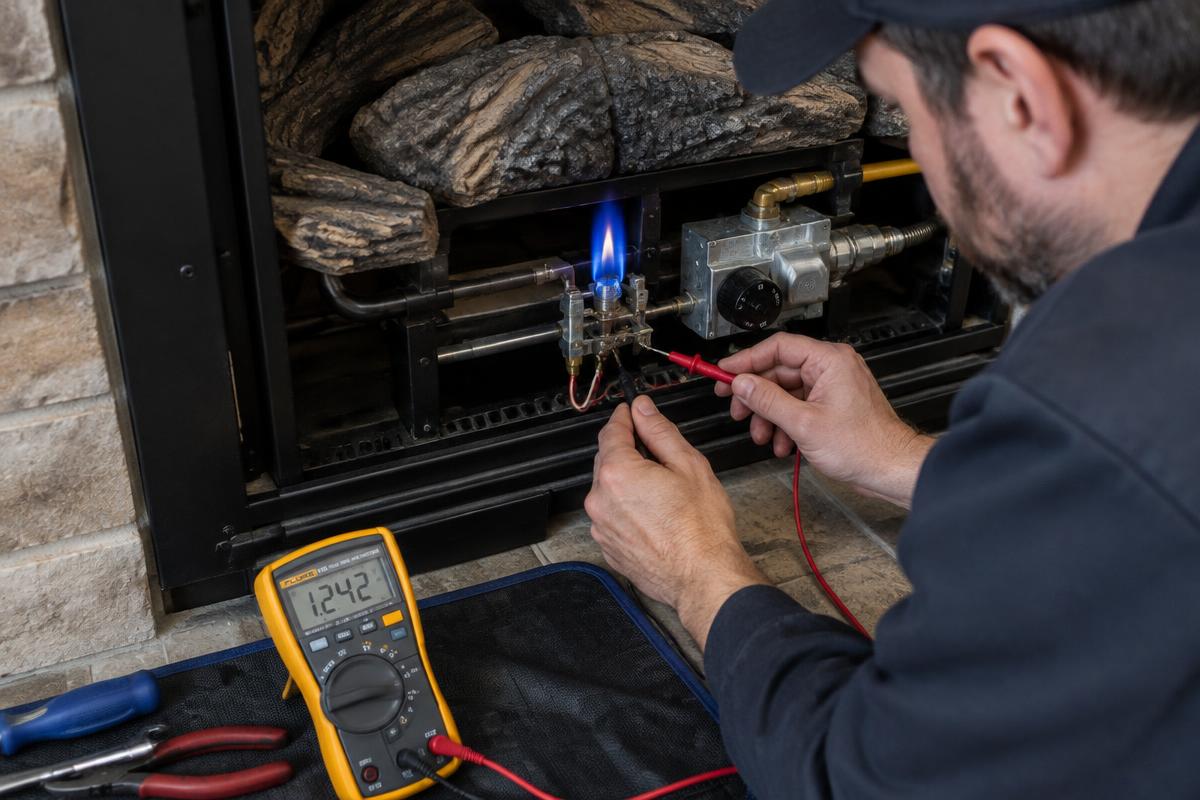
Gas valves, pilot equipment, burner settings, pressure testing and fuel conversion require appropriately qualified work. Do not reposition logs or embers, add decorative media or use another model’s arrangement to improve the appearance. Napoleon’s support information specifically explains that media kits are tested for particular appliances and cannot be exchanged indiscriminately. Stop using the unit for unexpected soot, damaged glass, forceful ignition or clearly abnormal flame behaviour. Gas smell and CO alarms require the emergency response rather than routine troubleshooting. Keep any installed safety barrier in place and do not bypass a protective control simply to restore heat.
Give Wood Appliances a Combustion and Chimney Plan
A Napoleon wood stove, insert or enclosed wood fireplace needs care that addresses both the firebox and the route carrying smoke outside. Burn only the fuel permitted by the exact manual, using properly seasoned wood rather than treated timber, rubbish or improvised fuels. Wet wood and prolonged smoky burning can contribute to deposits and poor performance. Do not try to correct every draft problem by building a larger fire, and never use flammable liquids to assist ignition. Keep loading, air-control operation and permitted fuel quantities within the manufacturer’s instructions rather than adopting techniques from an unrelated stove.
Arrange chimney and appliance inspection at an interval suitable for the manual, use and observed deposit accumulation. A wood insert’s liner and connection need attention even though much of the installation is concealed by the surround. Smoke entering the room, deteriorated connector joints, damaged door seals or evidence of overheating require investigation before continued use. Safe ash handling also matters: ashes can retain embers long after the fire appears finished. Follow the manual and use an appropriate covered metal container on a noncombustible surface away from buildings and combustible materials. Do not put apparently cold ash directly into household rubbish or a plastic bin.
Treat Electric Fireplaces as Electrical Equipment
An electric Napoleon fireplace does not burn gas or wood, so its normal operation does not create combustion exhaust that needs a chimney. It still requires the installation clearances, electrical supply and airflow specified for its model. A flame effect working while the heater does not operate is a different diagnostic problem from failed gas ignition. Record which functions work, whether a temperature setting is satisfied and whether any error indication appears. Owner checks should be limited to those expressly described in the applicable manual, not improvised access to internal boards, heaters or wiring.
Keep accessible air openings free of household dust using the permitted method, with the appliance switched off, cooled and electrically isolated as instructed. Do not spray cleaner into ventilation slots or use water around electrical components. A damaged cord, overheated plug, recurring protective trip or burning electrical smell needs qualified assessment. Do not repeatedly reset a breaker or fit a larger protective device to keep the fireplace running. Extension arrangements and power connections must follow the model’s instructions rather than convenience. When booking, clearly state that the appliance is electric so the provider can confirm whether the required diagnosis falls within its competence and scope.
Use Different Glass and Vent Care for Different Fuels
Glass care is not interchangeable across the Napoleon range. On a sealed gas appliance, homeowners should not remove the glass assembly to clean inside or investigate ignition. Arrange professional cleaning and assessment of the enclosure, seals and retaining components. A wood appliance’s door glass and gasket have different service instructions, while an electric fireplace may have a decorative panel with a separate procedure. In every case, allow complete cooling and use only the permitted cleaning method. Ordinary abrasive cleaners can damage surfaces, and appearance alone does not establish that a damaged panel remains suitable for operation.
Likewise, distinguish gas venting, wood chimneys and electric airflow openings. A wood system may need deposit removal through its complete flue route; a direct-vent gas appliance needs inspection appropriate to its approved vent components and termination; an electric appliance needs unobstructed cooling and heater airflow rather than sweeping. Observe accessible exterior terminations from ground level without climbing or disassembly. Indoors, maintain the required separation from furnishings and combustible materials. Napoleon’s support guidance warns against removing the protective screen from applicable fireplaces. Keep required barriers installed, and remember that a screen does not make hot glass safe for children or pets to touch.
Ask for an Inspection Matched to the Fuel and Installation
A professional visit should begin with appliance identification and an agreed scope. For gas equipment, that may include the combustion enclosure, approved media arrangement, ignition, safety controls, accessible venting and gas-related checks by a qualified technician. For wood equipment, the assessment should consider the firebox, door seals, internal combustion components, connector or liner, chimney condition, clearances and deposit accumulation. Electric work should address the relevant electrical and airflow components within the provider’s qualifications. A single statement that the fireplace has been cleaned does not explain which of these systems was actually assessed.
Ask the provider to identify inaccessible areas, additional work required and any conditions that prevent safe testing. A chimney inspection may reveal concerns that are not solved by replacing a stove part, just as gas shutdown may originate outside the fireplace itself. After repairs, affected components and safety functions should be checked according to the applicable instructions. Request a written report that separates observed defects, completed work and recommendations. This gives you a reliable record for future service and helps avoid repeated speculative repairs. It also clarifies whether another qualified trade or manufacturer-authorized channel must become involved before the appliance returns to use.
Verify Parts, Media and Accessories Before Installation
Napoleon’s official support information directs replacement-parts orders through local dealers and cautions that media kits are specific to approved appliances. That makes accurate identification essential before purchasing a blower, control module, glass assembly, gasket or decorative component. Ask for the approved part reference and confirmation that it matches the model, serial information and fuel configuration where relevant. A component advertised as universal is not automatically suitable. If an original part has been superseded, establish whether the approved replacement needs additional components or an updated installation procedure.
For wood appliances, internal components such as firebrick and baffles must match the particular design; changing their layout can affect combustion and protection of the appliance body. For electric units, electrical ratings and control compatibility matter as much as physical dimensions. Gas conversion and control-system replacement require qualified work, not an owner-installed collection of matching-looking pieces. Do not assume that an independent service business can approve a manufacturer warranty claim. Contact Napoleon or the relevant dealer channel about authorization, coverage and required documentation before commissioning work that depends on those terms. Keep the final part numbers and service findings with the appliance records.
Prepare for Service and Adjust Care Through the Seasons
Before the appointment, send model photographs and describe the fuel, appliance format and main concern. Include previous repairs, any alarm or shutdown history and recent changes to the home. Let the appliance cool fully, clear a working area and make manuals and controls available. Do not remove sealed gas glass, pull out an insert or disconnect wiring yourself. For wood service, ask the provider how the appliance should be left and whether access to the complete chimney route is needed. For electric diagnosis, explain whether the fault affects the flame display, heat output or both.
Schedule maintenance ahead of the period of greatest use, with frequency based on the exact manual and the installation’s history. Wood systems may need additional attention as deposits accumulate; gas systems need model-appropriate inspection rather than an assumption that clean fuel means no maintenance; electric equipment needs dust control and attention to abnormal heat or electrical behaviour. Continue testing household smoke and CO alarms according to their instructions. At season’s end, record unresolved concerns and arrange necessary work rather than forgetting them until the first cold evening. Follow the specific shutdown instructions, because gas pilot arrangements and electrical isolation procedures are not universal across Napoleon products.
Compare the Complete Repair and Replacement Options
A sound repair decision starts with a demonstrated fault and an assessment of the surrounding installation. An available approved component may restore an otherwise serviceable appliance, while substantial structural damage, unavailable safety-critical parts or extensive installation corrections may make replacement more practical. Avoid judging by age alone. Also distinguish an appliance defect from a chimney, venting or electrical-supply problem. Replacing the fireplace without correcting the underlying system can leave the original hazard or poor performance in place. Ask for a defined scope, the basis for the diagnosis and any limitations on what has been inspected.
Replacement requirements differ by fuel. A new wood appliance must suit the chimney, hearth and clearances; a gas replacement needs an approved vent arrangement and compatible fuel installation; an electric replacement needs the required power and airflow conditions. Similar outer dimensions do not prove interchangeability. Include removal, finishing work, permits where applicable and any necessary chimney or vent corrections in the comparison. Vaughan Chimney Services is independent, not a Napoleon manufacturer partner, so confirm the service scope and any outside specialist involvement. Warranty eligibility, manufacturer authorization and parts availability should be established separately rather than inferred from a company’s willingness to inspect the appliance.