Know your appliance
Montigo service begins with understanding what was installed, including the fireplace, venting and any separately specified heat-management equipment. The manufacturer’s documentation covers several residential gas fireplace families, gas inserts, outdoor products and power-vent accessories, so a single generic maintenance routine is not sufficient. A DelRay installation, an Illume insert and a larger architectural system can present different access and diagnostic requirements. This guide explains safe owner observations, professional inspection priorities and practical preparation for maintenance or repair. Vaughan Chimney Services is an independent business, not a Montigo manufacturer partner or authorized representative. Confirm the proposed provider’s qualifications and ability to work with the exact equipment, and check manufacturer requirements separately whenever warranty coverage or specialized system authorization is involved.
Identify the Fireplace and Its Associated Equipment
Begin by collecting the complete model designation and serial number, not just the Montigo brand name. The manufacturer’s download centre separates DelRay, Distinction, Divine, Illume and other product families, with additional manuals for accessories and power vents. Even within a family, size, configuration and production revision can change the relevant instructions. Obtain identification from existing records or a safely accessible label. Photograph the fireplace from the room, its visible controls and any accessible service information. Do not detach sealed glass or disturb a finished enclosure merely to obtain a clearer label photograph.
Identify associated equipment as well as the fireplace itself. A remote, heat-distribution accessory, power-vent controller or separate fan may have its own model information and instructions. Keep these documents together with the installation drawing if one exists. Large or customized installations may need more extensive records than a standard residential unit, particularly when access points are concealed. A technician should verify which components are actually present before diagnosing a startup sequence or airflow concern. This avoids a common mistake: assuming that equipment shown in a current brochure was included in an older installation with a similar-looking flame opening.
Match the Service to the Actual Appliance Type
Montigo’s official product-guide library includes indoor gas fireplaces, gas inserts and outdoor products. Its DelRay and Distinction manuals identify specific indoor direct-vent gas models and distinguish their natural gas or propane configurations. Those details matter because fuel, venting and appliance location determine the relevant inspection procedure. An insert fitted into an existing fireplace is not inspected solely as a decorative built-in unit, and an outdoor appliance should not be treated as suitable for enclosure inside a room. Always use the listing and instructions for the installed model rather than a general description of the brand.
The rating plate and installation records should establish the permitted fuel. Gas conversion is not a homeowner maintenance task, and parts from a propane version should not be assumed suitable for a natural gas appliance. Likewise, a familiar remote does not establish which ignition system or accessories are installed. Keep all fuel-system adjustments, gas-pressure measurements and control replacements within appropriately qualified professional work. For older or discontinued equipment, obtain the matching archived manual rather than substituting the closest current model. Correct identification is the foundation for reliable troubleshooting, particularly where previous owners have left incomplete paperwork or made undocumented changes.
Respond to Gas Smell and CO Alarms Before Arranging Service
If you smell gas, leave the building immediately. Do not attempt to light the fireplace, operate electrical switches, use an indoor phone or search around the appliance for a leak. Once everyone is outside at a safe location, contact the gas supplier’s emergency service. If the supplier cannot be reached, contact the fire department. Follow their instructions and keep people out until entry and operation have been cleared. Montigo’s gas fireplace manuals explicitly separate this emergency response from ordinary installation and maintenance work. A booking message, photograph or online enquiry is not a substitute for emergency assistance.
A carbon monoxide alarm is a different warning and requires action even without any gas odour. Move everyone into fresh air and call emergency services from outside. Seek urgent medical assessment if anyone has possible exposure symptoms, including dizziness, headache, nausea or confusion. Do not assume that an attractive flame proves safe combustion, and do not remove alarm batteries to continue heating. After an incident, the appliance should remain unused until the cause has been investigated and the appropriate authority permits return to service. Routine scheduling applies only once immediate hazards have been excluded, such as when arranging preventive maintenance or investigating a non-emergency remote-control problem.
Understand What Cool Wall Does—and Does Not—Mean
Montigo describes several heat-management arrangements for particular DelRay Linear and DelRay Square installations, including Cool Wall Release and Cool Wall Advantage. These are not universal features of every Montigo fireplace. Their presence depends on the model, approved components and the way the enclosure was built. Heat-management openings, ducts and discharge locations are part of a designed system, not spare ventilation that can be covered for appearance. If you do not have installation records, ask a qualified provider to establish which arrangement exists before changing a mantel, television position, wall finish or surrounding cabinetry.
The phrase cool wall does not mean cold glass, unrestricted combustible clearances or permission to omit the safety barrier. It also does not guarantee that a particular television can tolerate every installation condition. The appliance instructions, heat-management requirements and equipment manufacturer’s limits still matter. Do not create additional openings, seal existing release areas or reroute heat ducts yourself. A change that looks cosmetic can interfere with heat escape and increase temperatures inside the enclosure. Report unusual wall heating, discolouration or blocked outlets and stop using the appliance where damage or unsafe operation is suspected. Assessment should address the complete enclosure, not just the flame.
Treat Power Venting as a Separate, Model-Specific System
Montigo publishes separate manuals for power-vent products, which is a useful reminder that mechanical venting is not simply an extra room fan. Where a compatible power-vent system is installed, safe fireplace operation depends on the approved components and the required operating sequence. Not every Montigo fireplace has a power vent, and not every vent layout permits the same equipment. Obtain the actual accessory identification and installation documentation rather than inferring its presence from a sound outside or from the location of the fireplace within the building.
Owners can record whether a fan sound has changed, whether startup stops at a consistent point and whether the problem follows a power interruption. They should not bypass interlocks, bridge switches, alter controller wiring or keep resetting a system that refuses to establish safe operation. A technician may need to inspect the vent fan, controls, electrical supply and accessible vent route as an integrated system. Access to roof or wall equipment may require separate planning and safe working arrangements. When booking, mention that a power vent is installed or suspected, because a visit prepared only for a standard fireplace cleaning may not cover the necessary diagnostic scope.
Collect Useful Symptoms Without Altering the Fire
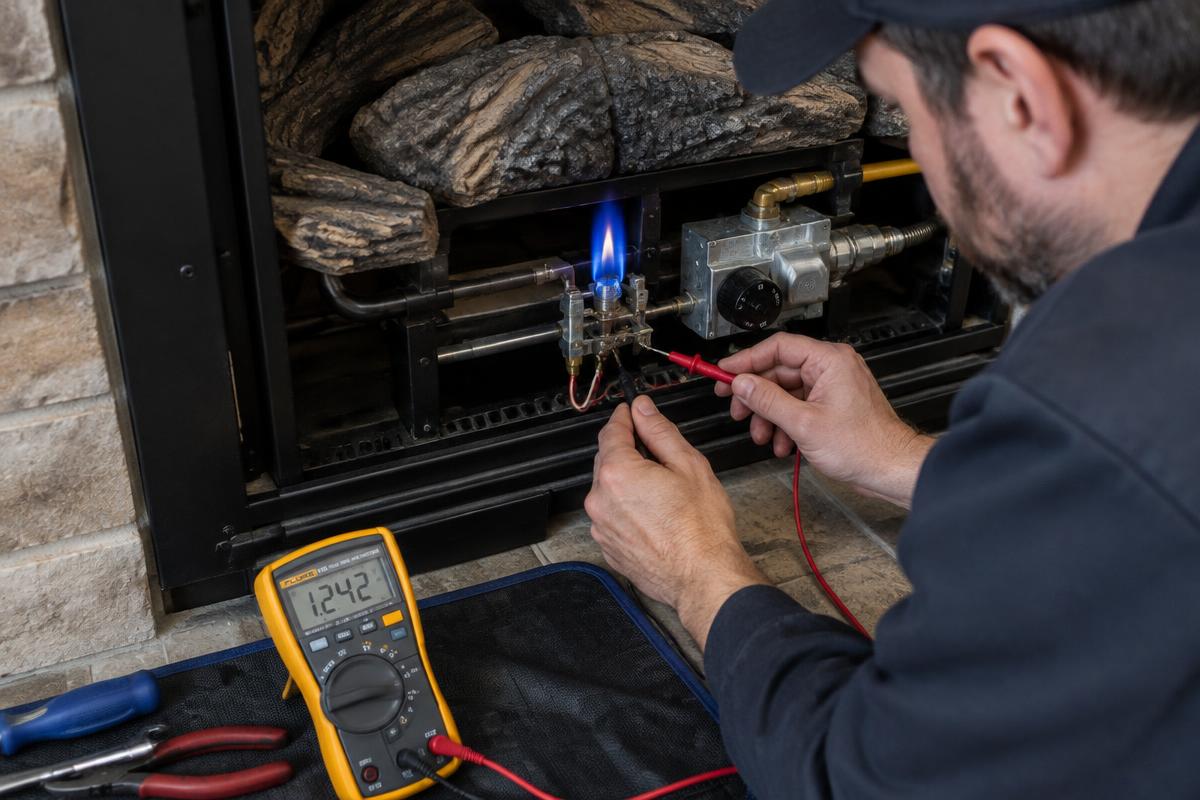
A clear symptom history helps more than speculative adjustments. Note whether the fireplace does not respond, starts and stops, produces unusual noise or behaves differently in particular weather. Include any displayed message and whether the issue began after construction, a control replacement or loss of electrical power. Follow only the owner checks permitted by the exact manual, such as verifying a control setting or replacing accessible remote batteries. Do not repeatedly attempt ignition after a failure, and never attempt to compensate for a persistent fault by changing gas controls or repositioning burner media.
Logs, glass media and decorative materials must remain in their approved configuration. Moving them to make the flame taller or more symmetrical can affect operation, even when the new arrangement looks attractive. Shut the fireplace down and arrange professional assessment for unexplained soot, damaged glass, forceful ignition or abnormal flames. If there is gas smell or a CO alarm, use the emergency procedure instead. Do not diagnose a gas valve, sensor or ignition module from a video alone. Similar symptoms can arise from fuel supply, venting, electrical or installation problems, and replacing a guessed component can leave the actual defect unresolved.
Keep Glass, Barriers and Terminations in the Maintenance Plan
On a sealed gas fireplace, the glass assembly forms part of the combustion enclosure. Homeowners should not release it to clean inside, investigate a pilot or rearrange decorative materials. Exterior cleaning should follow the applicable owner instructions, with the fireplace completely cool and without abrasive tools or liquid sprayed into openings. Arrange service for internal film, damaged seals, cracks or loose retaining components. Montigo’s manuals warn that hot glass causes burns and identify the protective barrier as a safety measure. A barrier reduces contact risk but does not eliminate the need to supervise children and vulnerable people.
Vent care should be appropriate to gas equipment rather than copied from a wood-chimney sweeping routine. From ground level, observe accessible exterior terminations for obvious obstruction, damage or vegetation. Do not climb onto a roof or dismantle the termination yourself. Indoors, keep convection paths and any documented heat-management outlets unobstructed. Report persistent staining, unusual icing or changes after nearby building work. During professional service, the glass, gasket, barrier and accessible vent components should be assessed together, because cleaning the visible panel alone does not establish that the combustion enclosure, airflow route and termination remain in suitable condition.
Expect a Documented Inspection and Verified Replacement Parts
A professional assessment should begin with the correct manuals and an understanding of the installed configuration. Depending on the appliance, work may include inspection of the combustion enclosure, glass seals, ignition equipment, burner, approved media arrangement, controls, electrical connections and accessible venting. A qualified gas technician should perform any required gas-supply, pressure or operating checks. Where heat management or power venting is present, its relevant components and safety functions must be included rather than treated as unrelated extras. Ask the provider to explain any limitations caused by concealed equipment or unavailable access.
Replacement components should be identified by model, serial information, fuel and approved part reference. Physical fit does not establish compatibility for a pilot assembly, control module, glass panel, fan or remote receiver. An approved superseding part may require additional instructions or associated components. Decorative media also need the correct listing for the fireplace. Request a written record of the diagnosis, parts installed and post-repair checks, with unresolved installation concerns clearly stated. Manufacturer authorization and warranty eligibility should be verified through the appropriate Montigo channel; an independent service appointment does not automatically establish that work qualifies for manufacturer-funded repair.
Prepare the Site and Schedule Care Before Heavy Use
Provide the model information, photographs and a concise fault history before the appointment. Mention all relevant accessories and whether access to a fan, roof termination or concealed service panel is needed. Let the fireplace cool completely, clear the working area and keep the remote, manuals and previous invoices available. Do not pull the appliance out or remove sealed glass in advance. Tell the provider about delicate finishes, limited parking access for equipment or any building arrangements that affect safe entry. Good preparation helps the technician arrive with an appropriate scope rather than discovering an undocumented system halfway through the visit.
Schedule maintenance before the period when you rely most on the fireplace, using the applicable manual and inspection history to determine timing. Keep dust away from permitted accessible openings, maintain household smoke and CO alarms and observe exterior terminations safely after significant snow or storms. Outdoor equipment needs its own model-specific seasonal procedure; do not apply indoor instructions automatically. Record intermittent faults when they occur, including weather and operating duration, rather than waiting until the evidence is forgotten. If a problem remains unresolved at the end of the season, address it before the next heating period rather than assuming months of non-use will correct it.
Compare Repair, Replacement and Enclosure Changes Together
Repair can be reasonable when a specific failed component is available and the rest of the appliance and installation remain serviceable. Replacement may warrant closer consideration when there is substantial damage, unavailable safety-critical equipment or extensive corrective work. A diagnosis should distinguish the fireplace fault from problems in venting, electrical supply or the enclosure. Otherwise, a replacement control or even a replacement fireplace may leave the original cause untouched. Ask for a defined repair scope rather than authorizing an open-ended sequence of speculative parts changes based only on the appliance’s age.
A replacement project must account for vent compatibility, fuel supply, framing, clearances, access and any heat-management or power-vent requirements. Existing ducts, vent sections and controls are not automatically transferable to a newer model. Include finishing work and required inspections when comparing the full options. If the main goal is a television or wall redesign, establish the proposed appliance’s requirements before finalizing cabinetry and finishes. Vaughan Chimney Services is independent, not a Montigo manufacturer partner; request confirmation of qualifications and any specialized support needed. Make warranty and authorization enquiries through the appropriate manufacturer channel before committing to work that depends on those arrangements.