
Know your appliance
A Mendota fireplace should be serviced as a specific gas appliance, not simply as a decorative feature behind glass. The model, production generation, fuel designation, vent arrangement and installed accessories all affect the correct maintenance approach. Mendota’s official resources distinguish gas fireplaces from gas inserts and provide separate documentation for different product families and revisions. This guide explains how to prepare for service, recognize conditions that require shutdown and make informed repair decisions without attempting gas work yourself. Vaughan Chimney Services is an independent service business, not a Mendota manufacturer partner or authorized representative. Before arranging work, confirm that the proposed provider has the qualifications, documentation and parts access appropriate to your appliance, particularly where manufacturer warranty requirements may apply.
Start With the Exact Mendota Model and Generation
The Mendota name alone does not identify the equipment inside your fireplace enclosure. A built-in gas fireplace and an insert fitted into an existing fireplace opening can have different venting, access arrangements and replacement components. Mendota’s resources include FullView fireplaces, linear models and separate insert documentation. Its FV44i manuals also demonstrate why generation matters: a manual for one FV44i version should not automatically be used for another. Record the complete model designation, serial number and fuel information from existing paperwork or a safely accessible identification label. Do not remove sealed glass or dismantle decorative finishes to find it.
Photographs help establish the installation before anyone orders parts. Include the entire fireplace, visible controls, remote handset, surrounding mantel and any accessible exterior termination photographed from the ground. Keep installation invoices and previous service records together, especially if the appliance has received replacement controls or an approved conversion. A technician should match the identification details to the applicable manufacturer instructions rather than selecting a manual by appearance. This prevents a familiar-looking fireplace from receiving the wrong troubleshooting procedure, glass assembly or control component. If the label cannot be accessed safely, leave identification to the service visit.
Understand the Appliance, Fuel and Installation
Mendota’s official FAQ distinguishes a gas fireplace from a gas insert: the insert occupies an existing wood-burning fireplace opening, while a fireplace is installed as its own appliance within an appropriate enclosure. That distinction changes what a technician must inspect around the unit. For example, an insert installation requires attention to the existing fireplace environment and its approved liner arrangement, while a built-in installation requires assessment of the appliance enclosure and specified vent system. Neither should be treated as an open wood fire, and neither is an appropriate place to burn wood, paper or household waste.
The fuel listed on the rating plate is equally important. Official Mendota manuals identify the permitted gas and explain that any allowed conversion depends on a certified kit and the applicable instructions. Natural gas and propane components are not interchangeable simply because they fit physically. Homeowners should not adjust gas pressure, change orifices or investigate the gas valve. Record whether the appliance has a blower, remote receiver or other documented accessory, but do not assume every Mendota includes the same equipment. Installation-specific features must be confirmed against the exact manual before diagnosing performance, planning renovations or comparing replacement options.
Separate Gas and Carbon Monoxide Emergencies From Booking
A gas smell is not an ordinary fireplace service request. Leave the building immediately and keep everyone outside. Do not attempt ignition, operate electrical switches, use a phone inside or investigate the source. From a safe location outside, contact the gas supplier’s emergency line; if the supplier cannot be reached, contact the fire department. Follow emergency instructions and do not re-enter or restart the appliance until the responsible authority says it is safe. Mendota’s installation manuals place gas-smell warnings prominently because investigating a suspected leak can create an ignition hazard.
A carbon monoxide alarm requires a separate emergency response even when there is no gas smell. Move everyone, including pets, into fresh air and call emergency services from outside. Seek urgent medical assistance for headache, dizziness, nausea, confusion or other possible exposure symptoms. Carbon monoxide cannot be assessed by smell, flame appearance or whether the fireplace looks like it is working normally. Never silence an alarm and continue using the appliance. Routine booking is appropriate for non-emergency concerns such as a remote that no longer responds or a scheduled inspection, provided there is no indication of gas leakage, CO exposure or another immediate hazard.
Observe Symptoms Without Working on Gas Components
Useful troubleshooting begins with a description, not disassembly. Note whether the fireplace fails to respond, attempts ignition without establishing a flame, shuts down after running or behaves differently during windy weather. Record what the remote display shows and whether a problem followed a power interruption, building work or a previous service visit. Owner checks should stay within the exact operating manual, such as confirming the intended control setting or replacing accessible handset batteries where instructed. Do not repeatedly cycle a fireplace that fails to light, and do not use repeated resets to keep a faulting appliance operating.
Stop using the fireplace if glass is damaged, soot appears unexpectedly, ignition becomes forceful, flames behave abnormally or the appliance develops an unexplained strong odour. These observations do not identify a particular failed part; several installation or combustion problems can produce similar symptoms. Leave gas controls, pilot assemblies, ignition wiring and burner adjustments to a qualified technician. Do not move logs, embers or decorative media to improve the flame. Their positions are part of the tested appliance configuration. A short description of what happened before shutdown is more useful to the technician than a series of homeowner alterations that obscure the original fault.
Treat Glass and the Safety Barrier as Functional Parts
Viewing glass is part of the operating system, not an ordinary household window. On a sealed gas appliance, the glass assembly and its seals help maintain the intended combustion enclosure. Cleaning the inside is therefore not a reason for a homeowner to release latches or remove the assembly. Arrange professional attention for interior deposits, damaged seals, loose glass or cracking. Exterior care should be limited to what the owner’s manual permits, with the appliance completely cool and an appropriate non-abrasive product. Avoid spraying liquids into edges, controls or openings, and do not try to polish away persistent deposits with abrasives.
A qualified service visit should assess the glass condition, gasket integrity, retaining arrangement and safety barrier before the fireplace returns to operation. Mendota manuals identify the hot-glass burn hazard and the importance of the protective barrier. A screen reduces accidental contact risk but does not make the appliance cool to touch. Keep children, vulnerable adults and pets away, and maintain suitable supervision. If replacement glass is needed, the complete approved specification matters, including dimensions, material, assembly and seals. Ordinary window glass, an improvised gasket or a superficially similar panel is not an acceptable substitute for the listed replacement.
Maintain the Vent Path and the Space Around the Fireplace
Direct-vent gas equipment depends on the approved route for combustion air and exhaust. A fireplace may appear clean while its exterior termination is obstructed or its concealed venting needs attention. From a safe ground-level position, look for obvious snow accumulation, vegetation, debris or damage around the termination. Do not climb onto a roof, dismantle a cap or insert tools into vent openings. Report recurring icing, staining or unusual sounds rather than assuming they are normal seasonal effects. Vent inspection is different from sweeping a wood-burning chimney, and the service method must match the gas appliance and installed vent components.
Inside the home, keep furniture, curtains and stored materials outside the clearances specified for the exact installation. Do not block convection openings or cover an access panel with permanent finishes. Renovations can affect both clearances and serviceability: a deeper mantel, new television enclosure or added wall finish may change the conditions under which the fireplace was installed. Do not assume that an architectural heat-management arrangement or power vent is present simply because another gas fireplace uses one. Any accessory must be documented for the Mendota model and installation. Have proposed enclosure changes reviewed before construction rather than trying to correct overheating afterward.
What a Professional Mendota Inspection Should Establish
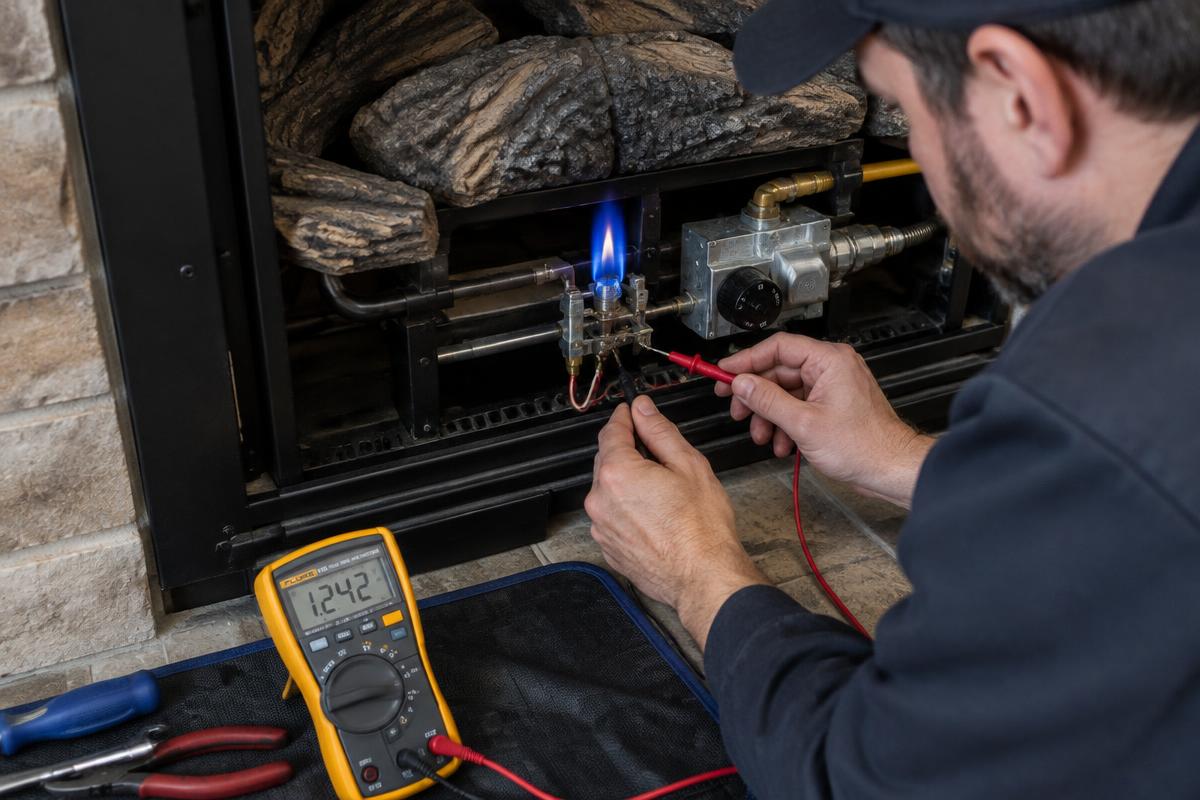
A useful inspection begins with identification, service history and the owner’s reported symptoms. The technician should obtain the applicable instructions, inspect accessible installation conditions and assess whether the appliance can be tested safely. Depending on the model and scope of work, the assessment can include the combustion enclosure, glass and seals, burner and approved media arrangement, ignition system, safety controls, electrical connections, blower and vent termination. Gas supply and operating checks belong to an appropriately qualified gas technician using suitable instruments. A visual flame check alone is not a complete assessment of the appliance or its installation.
Ask for findings that distinguish routine cleaning, worn components and installation defects. If a problem lies behind a finished wall or in an inaccessible vent section, the technician should explain what remains unverified and whether additional access is needed. After authorized repairs, the appliance should be reassembled and checked according to the manufacturer’s procedure, including the protective barrier and any affected safety functions. Request a written summary of the fault, work completed, parts used and remaining recommendations. A documented inspection provides a better basis for decisions than a vague assurance that the fireplace looks good or an unsupported promise that cleaning will solve every operating problem.
Choose Replacement Parts by Documentation, Not Appearance
Correct parts selection starts with the full model, serial number, production generation and installed fuel configuration. A remote receiver, pilot assembly, blower or glass component that resembles the original may still have different electrical characteristics, mounting details or approval requirements. Where a part has been superseded, the supplier or technician should verify the approved replacement and any accompanying instructions. Keep packaging references and part numbers with the service record. Do not purchase an unverified control kit simply because an online description lists Mendota somewhere among many compatible brands.
Decorative components also need exact matching. Logs, liners, embers and media influence how the appliance operates, and additions intended for another model can affect flame behaviour or obstruct burner areas. Their replacement and arrangement should follow the specific manufacturer instructions, not a photograph of a different fireplace. Fuel conversion, where approved, is professional work requiring the correct kit and verification; it is not a way to reuse whatever parts are available. Before authorizing an expensive repair, ask whether the proposed component is approved, obtainable and appropriate to the appliance’s generation. Warranty eligibility and authorization should be confirmed with Mendota or the relevant authorized channel rather than assumed.
Prepare for Service and Build a Seasonal Care Routine
Before a scheduled visit, let the appliance cool fully and clear a practical working area around it. Keep children and pets elsewhere, make the remote and manuals available and identify any access arrangements the technician needs to know about. Do not remove sealed glass, pull an insert forward or open concealed gas connections in an attempt to save time. Send model photographs and the symptom history in advance when possible. Explain whether the problem is intermittent and whether it appears only after long operation, during particular weather or after other household equipment starts.
Plan inspection and necessary maintenance ahead of the heating season, with the actual interval guided by the applicable manual, usage and previous findings. Between visits, keep accessible exterior surfaces and surrounding openings free of household dust using only permitted methods. Observe the termination safely after significant snowfall and maintain smoke and CO alarms according to their instructions. At the end of the season, record unresolved changes rather than allowing them to disappear from memory over summer. Pilot settings, power arrangements and shutdown procedures vary, so follow the model’s operating instructions rather than applying a generic seasonal checklist borrowed from another fireplace.
Decide Between Repair and Replacement With the Whole Installation in View
Age alone does not decide whether a Mendota should be repaired. A localized fault in an otherwise sound appliance may justify replacement of an approved component. More substantial concerns include damaged combustion enclosure components, unavailable safety-critical parts, repeated faults without a clear remedy or an installation that needs significant correction. Ask for a diagnosis and itemized scope before comparing options. Replacing a control component will not correct unsuitable venting, and cleaning will not resolve a structural defect. The decision should reflect what is actually wrong rather than the number of years since installation.
Replacement also involves more than choosing a similar viewing width. The new appliance must suit the available opening, fuel supply, vent route, clearances, electrical requirements and service access. Existing venting should not be assumed reusable unless the new manufacturer’s instructions and the installation assessment permit it. Compare the complete repair scope with the complete replacement scope, including finishing work and any necessary permits or inspections. Vaughan Chimney Services should be understood as an independent business, not a source of automatic manufacturer authorization or warranty approval. Request clear confirmation of service qualifications, parts sourcing and any manufacturer involvement before deciding how to proceed.